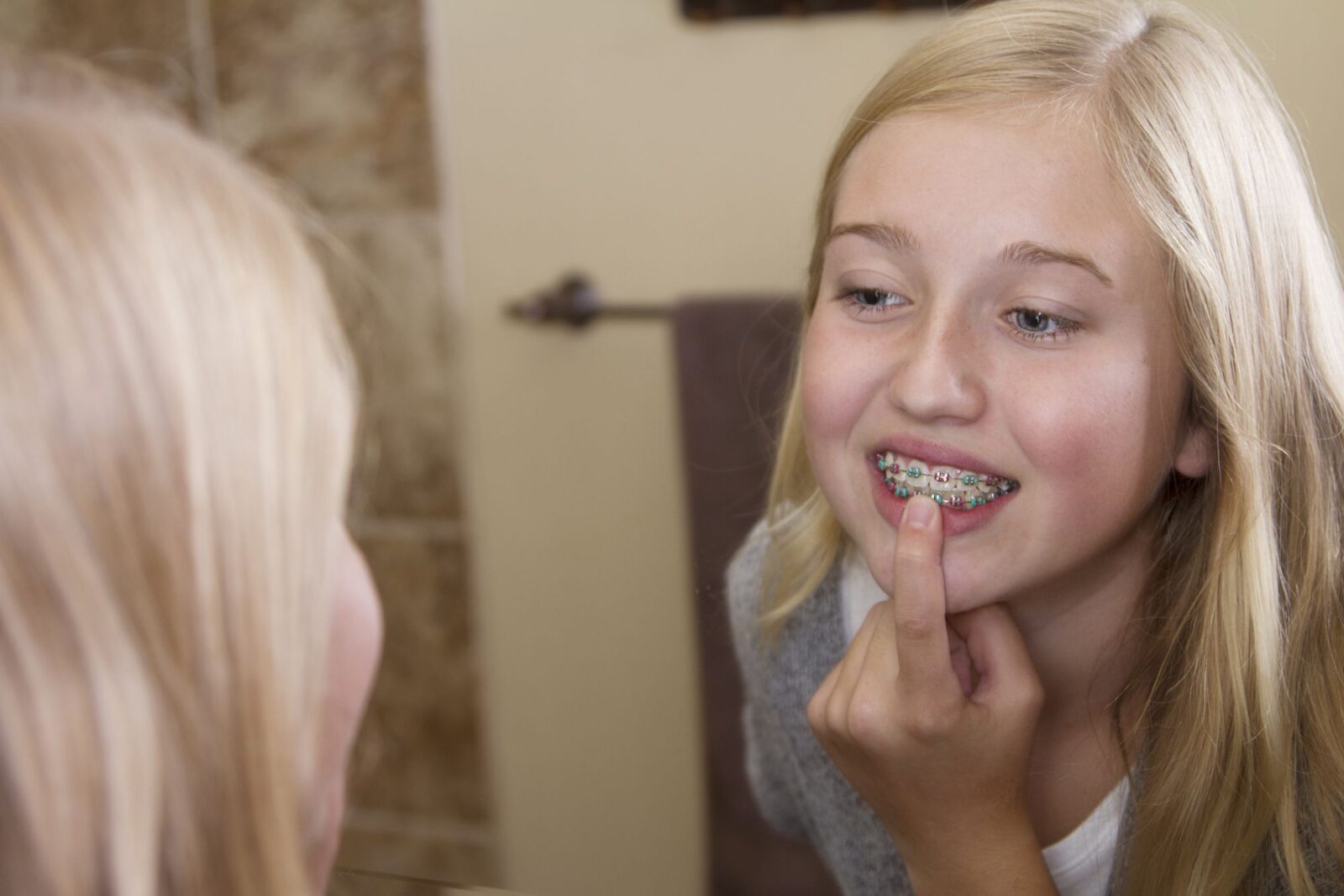
If your child’s brackets keep breaking, the most common causes are eating hard or sticky foods, biting into foods incorrectly, and habits like nail-biting or chewing on pens. Even one broken bracket can slow tooth movement and extend treatment time. Knowing why brackets break helps you and your child take steps to protect their braces and stay on track with treatment.

At Hinsdale Orthodontics & Pediatric Dentistry, Dr. Riccio and Dr. Blair see families with the same concern. The good news? Most bracket breakage is preventable once you know what to look for. Let’s break down exactly what’s happening and how to fix it.
What Is a Broken Bracket and Why It Matters
Brackets are the small metal or ceramic squares bonded directly to each tooth. They hold the archwire in place, and that wire applies the steady pressure that moves teeth into alignment. When we talk about a “broken bracket,” we mean the bond between the tooth and bracket has failed. The bracket may loosen, spin on the wire, or detach completely.
Here’s why this matters more than you might think:
Braces work through continuous, controlled force. Every bracket plays a role in guiding specific teeth. When one bracket breaks, that tooth stops receiving the pressure it needs to move. The result? That tooth falls behind while the others keep shifting.
Even one loose bracket, if left unrepaired for a few weeks, can add time to your child’s treatment. Multiple breaks throughout treatment can mean extra appointments and adjustments.
Repeated breakage is also a signal. It tells us something in your child’s diet, habits, or the original bonding process needs attention. Rather than just fixing the bracket again, we look for patterns to prevent future problems.
If your child is new to treatment, our Orthodontics for Children, Orthodontics for Teens, and Orthodontics for All Ages pages can help you understand what to expect during each stage of care.
Top 6 Reasons Braces Brackets Break
Why do braces brackets break? In most cases, the cause comes down to six factors: hard foods that crack the bond, sticky foods that pull brackets loose, biting into whole foods the wrong way, nervous habits like chewing pens, sports impacts without a mouthguard, and occasional bonding or bite-related issues. Dr. Riccio and Dr. Blair walk through each one below.
1. Are Hard Foods Causing the Breakage?
This is one of the most common causes of broken brackets. Hard foods put sudden, intense pressure on brackets that the bonding adhesive can’t withstand.
Foods to steer clear of:
- Nuts and seeds
- Ice, which is a major offender
- Hard candy and lollipops
- Popcorn kernels
- Raw carrots, apples, or corn on the cob, unless cut into small pieces
- Hard pretzels and chips
- Crusty bread or bagels
2. Are Sticky and Chewy Foods to Blame?
Sticky foods grab onto brackets and pull them away from teeth as your child chews.
Skip these treats:
- Caramel and taffy
- Gummy candies and fruit snacks
- Chewing gum
- Chewy granola bars
- Tootsie Rolls and similar candies
- Licorice
For more food guidance, visit our blog on what to eat with braces.
3. Is Your Child Biting Into Foods the Wrong Way?
Even braces-safe foods become bracket-breakers when eaten the wrong way. Biting directly into a whole apple, corn on the cob, or a thick sandwich puts tremendous force on front brackets.
The fix: Cut foods into small, bite-sized pieces. Remove corn from the cob. Slice apples. Break sandwiches into smaller portions.
4. Are Everyday Habits Stressing the Brackets?
Many kids don’t realize their habits are causing damage:
- Nail-biting
- Chewing on pens, pencils, or pen caps
- Chewing ice
- Using teeth to open packages
- Biting on straws or water bottle caps
5. Could Sports and Physical Activities Be a Factor?
A ball to the face, an elbow during basketball, or a fall during skateboarding can knock brackets loose instantly. Kids who play sports without a properly fitted orthodontic mouthguard often see more frequent breakage.
6. Are Bonding or Bite Issues Playing a Role?
Sometimes the cause isn’t behavioral. Poor oral hygiene can weaken the adhesive bond over time. Certain teeth, especially those with unusual bite forces or positioning, may experience more stress on their brackets. In these cases, Dr. Riccio and Dr. Blair may adjust the bonding approach or bracket placement.
Families comparing bracket types can learn more about Damon metal braces and Damon clear braces.

Why Preventing Your Child’s Brackets From Breaking Matters
Protecting your child’s brackets isn’t just about avoiding inconvenience. The benefits of keeping brackets intact show up in real ways throughout treatment.
How Does Prevention Shorten Treatment Time?
Every broken bracket can delay progress. Kids who take care of their braces often finish treatment right on schedule, while frequent breakage can push the finish line back by weeks or months. Consistent pressure on each tooth keeps the whole plan moving forward as Dr. Riccio and Dr. Blair originally mapped it out.
How Does Prevention Save Time and Money for Families?
Repair visits mean time out of school for your child and time off work for you. Preventing breakage keeps your family’s schedule on track. While many orthodontic treatment plans include some repairs, repeated breakage may lead to additional fees. Emergency or after-hours visits can cost extra too.
More predictable results. Consistent pressure on all teeth creates the best outcomes. When brackets stay in place, teeth move as planned, and the final smile looks exactly as expected.
Less discomfort. Broken brackets often mean poking wires and irritated cheeks. Your child will be more comfortable when everything stays where it should.
Less stress for everyone. Knowing what to avoid and how to handle problems gives both you and your child confidence throughout treatment.
To keep treatment on track, review our tips for keeping braces clean and our guide to orthodontic care for all ages.
Broken Brackets vs. Other Braces Emergencies
Not every braces problem requires the same response. Here’s how to tell what you’re dealing with:
| Issue | What It Looks Like | Urgency Level | What to Do |
|---|---|---|---|
| Broken bracket | Bracket slides on wire, spins, or detaches completely | Call within 1-2 days | Cover with wax, save the bracket, call the office |
| Poking wire | Wire end sticks out and irritates cheek or gums | Low to moderate | Cover with wax, try gently pushing wire down with a pencil eraser, call if it persists |
| Lost separator/spacer | Small rubber ring falls out before banding appointment | Low | Call to report, may need replacement |
| Loose band | Metal ring around back tooth feels loose or wiggly | Call within 1-2 days | Avoid sticky foods, call for repair appointment |
| Severe discomfort or swelling | Significant soreness, swelling, or signs of infection | Call immediately | Contact the office right away |
The key question: Is your child hurting, or is something causing active damage to their mouth? If yes, call right away. If the bracket is loose but not causing discomfort, you have a day or two to schedule a repair.
You can reach our team through the Contact Us page, or request an appointment through our Free Consult page if you are exploring treatment for the first time.
How Much Does Bracket Repair Cost?
Knowing the financial side of bracket repairs helps you plan ahead:
What’s typically included: Most orthodontic treatment contracts include a certain number of bracket repairs in the overall fee. This covers normal wear and expected occasional breakage.
When extra costs may apply:
| Situation | Potential Cost Impact |
|---|---|
| Repeated breakage beyond included repairs | Per-bracket replacement fee |
| After-hours emergency visits | Additional appointment charge |
| Extended treatment time | More adjustment appointments |
| Additional retainer time | Extra retainer costs |
What we do at Hinsdale Orthodontics: Dr. Riccio and Dr. Blair discuss repair policies and what’s included in your treatment fee during your consultation. We believe in being upfront, so you’ll know exactly what to expect before treatment begins. You can also review our Financing & Insurance page for more information.
If your child is experiencing frequent breakage, we’ll work with you to identify the cause and find solutions. Sometimes a conversation about food choices or habits makes all the difference, and our team is happy to coach families through small adjustments that go a long way.
When to Call the Orthodontist vs. Wait
Knowing when to call can save you stress and help your child get the right care at the right time.
Call right away if:
- The bracket has completely fallen off
- Your child swallowed the bracket, which is usually harmless, but we want to know
- The broken bracket is causing significant discomfort
- A wire is poking into the cheek or gums and can’t be managed with wax
- There’s swelling, bleeding, or signs of infection
Call within 1-2 business days if:
- The bracket is loose but still attached to the wire
- Your child notices the bracket spinning or sliding
- There’s mild soreness that wax can manage temporarily
What to do while you wait:
- Apply orthodontic wax to cover any sharp edges and prevent irritation
- Save the bracket if it falls off completely. Place it in a small bag and bring it to your appointment
- Stick to soft foods and avoid anything hard, sticky, or chewy
- Continue brushing gently around the loose bracket
- Never try to cut the wire yourself or reattach the bracket at home

Frequently Asked Questions About Broken Brackets
Will a broken bracket extend my child’s treatment time?
One broken bracket, repaired quickly, typically won’t add significant time. However, if the bracket stays broken for weeks or if breakage happens repeatedly, treatment can take longer. Each break interrupts the steady pressure needed to move that tooth.
Does insurance cover broken bracket repairs?
Most orthodontic insurance covers the overall treatment, and repairs are usually part of that package. Check your specific plan for details. At Hinsdale Orthodontics, we help families understand their coverage during the consultation.
Can my child still eat normally with a loose bracket?
Not quite. While waiting for repair, your child should eat only soft foods and avoid anything hard, sticky, or chewy. This prevents further damage and keeps the loose bracket from causing irritation.
How many broken brackets is too many?
There’s no magic number, but if your child breaks brackets more than once or twice during treatment, it’s time to look at the underlying cause. Dr. Riccio and Dr. Blair will work with you to identify patterns and make changes.
Are ceramic brackets more likely to break than metal?
Ceramic brackets can be slightly more prone to breakage because the material is harder but more brittle than metal. With proper care and smart food choices, ceramic brackets hold up well for most kids and teens. Learn more about our Damon clear braces and Damon metal braces options.
Can Invisalign be a better option for kids who keep breaking brackets?
For some children and teens, Invisalign or clear aligners offer an alternative that eliminates bracket breakage entirely. Aligners do require excellent compliance, though. During your consultation, we’ll discuss which option fits your child’s lifestyle and treatment needs best.
When your child’s brackets keep breaking, it’s frustrating for everyone. But with the right knowledge and a few habit changes, most families see big improvement in how long brackets stay put. Dr. Riccio, Dr. Blair, and our team are here to help you get your child’s treatment back on track.
If you have questions about preventing future breakage or want to learn more about daily care that keeps braces working their best, our team is happy to help during your child’s next visit. Caring for braces is a shared effort between families and our team, and we’re glad to walk that road with you.
To continue learning, visit our Braces, Damon Metal Braces, Damon Clear Braces, Orthodontics for Children, Orthodontics for Teens, and Free Consult pages.