
Children should first see an orthodontist by age 7. By this age, enough permanent teeth have emerged for an orthodontist to spot developing issues like crossbites, crowding, or jaw growth concerns. Early evaluation rarely means early treatment. It simply gives the orthodontist a chance to monitor growth.
The American Association of Orthodontists recommends the age 7 benchmark because your child’s first permanent molars and incisors have typically come in by then. These teeth give a clear picture of how the bite is developing and whether the jaws are growing in harmony.
At Hinsdale Orthodontics & Pediatric Dentistry, Dr. Riccio and Dr. Blair see many young patients for these early screenings. Most children simply need monitoring until more permanent teeth arrive. Think of it as a checkup for your child’s smile development, not a commitment to braces.
If you are already comparing treatment options, you can also review our Orthodontics for Children, Orthodontics for Teens, and Orthodontics for All Ages pages.
What Is an Early Orthodontic Evaluation?
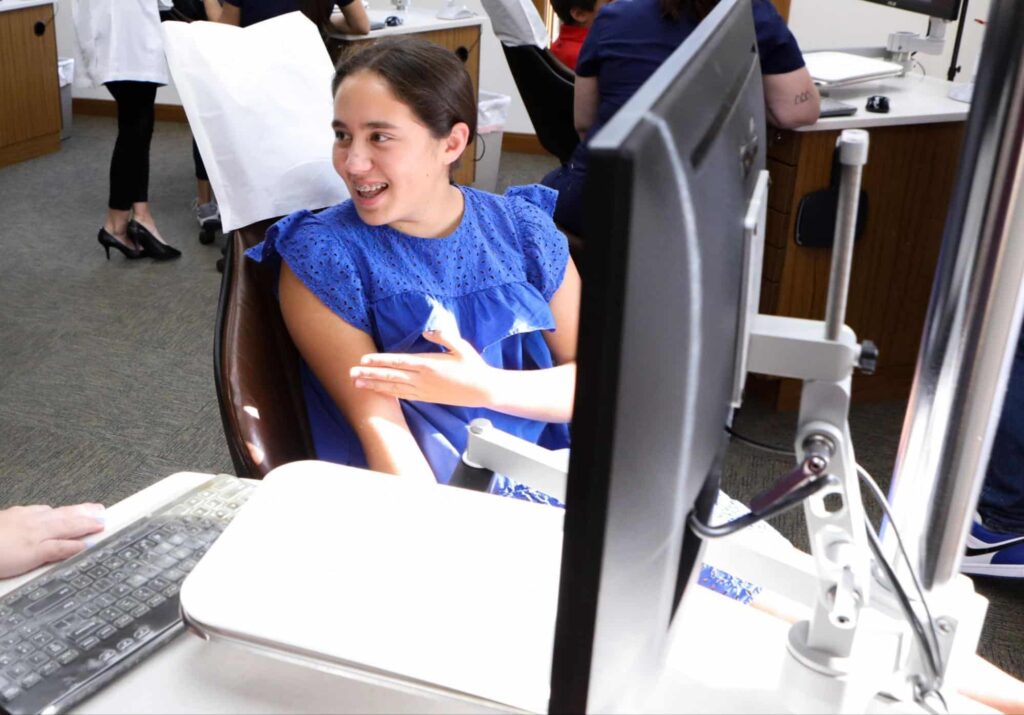
An early orthodontic evaluation is a screening visit that examines a child’s developing teeth, jaws, and bite around age 7. The goal is to identify any concerns while a child’s facial bones are still growing and most responsive to gentle guidance.
During this visit, the orthodontist looks at how baby and permanent teeth are positioned, how the upper and lower jaws relate to each other, and whether habits like thumb sucking or mouth breathing may be affecting development. The visit also documents a baseline that can be compared against future growth.
Early evaluations are different from regular dental checkups. A general dentist focuses on cavities, gum health, and overall oral hygiene. An orthodontist looks specifically at alignment, spacing, and skeletal development. Both types of visits are important, and they work together to support healthy growth.
One benefit for families is that Hinsdale Orthodontics & Pediatric Dentistry offers both pediatric dentistry and orthodontic care in one place. This can make it easier to coordinate your child’s dental development, routine visits, and orthodontic monitoring.
Three outcomes are possible after an early evaluation. The first is reassurance that everything is developing normally. The second is a recommendation to return periodically so the orthodontist can track changes over time. The third is a recommendation for Phase 1 interceptive treatment, which is usually reserved for specific concerns that benefit from early action.
Parents often leave these visits with peace of mind and a clearer understanding of what to expect in the coming years.
How the First Orthodontic Visit Works
Many parents wonder what actually happens during a child’s first orthodontic appointment. The process is simple, kid-friendly, and designed to put both you and your child at ease.
What Happens During the Exam?
Dr. Riccio and Dr. Blair will examine your child’s teeth, jaws, and facial structure. They’ll look at how the teeth come together and check for any developing concerns.
What Digital Imaging Tools Are Used?
Using the iTero digital scanner and 3D i-CAT FLX X-ray, the team captures detailed images of your child’s mouth. These tools show teeth that haven’t erupted yet and reveal how the jaw bones are developing.
What Will You Discuss With the Orthodontist?
You’ll have time to share any concerns you’ve noticed. Does your child breathe through their mouth? Have trouble chewing? Still sucking their thumb? These details help create a full picture.
What Recommendations Might You Receive?
Based on the exam, you’ll receive one of three recommendations:
- Monitor and watch, which is the most common outcome
- Begin Phase 1 interceptive treatment
- Wait for Phase 2 complete treatment in the teen years
The entire visit typically takes 30 to 45 minutes. Your free consult comes with no pressure and no obligation. Families who prefer to start from home can also use our Virtual Consult option.
Benefits of Seeing an Orthodontist Early
Early visits can make a real difference in your child’s dental development. The reason comes down to timing, because young bones respond to guidance in ways that mature bones do not.
Why Does Early Timing Matter?
| Benefit | Why It Matters |
|---|---|
| Guide jaw growth | Bones are still developing and respond well to gentle guidance |
| Correct harmful habits | Thumb sucking and tongue thrust can be addressed before causing permanent changes |
| Protect protruding teeth | Front teeth that stick out are more likely to get injured during play |
| Create space for permanent teeth | Crowded teeth can be given room to erupt properly |
| Simplify future treatment | Teen braces may be shorter or less complex |
| Support social comfort | Visible alignment issues can be addressed before they affect how a child feels in group settings or school photos |
How Does Early Treatment Use Natural Growth?
According to the American Association of Orthodontists, early treatment can take advantage of a child’s natural growth processes. When an orthodontist works with developing bones rather than against fully formed ones, treatment often becomes more straightforward.
Dr. Riccio and Dr. Blair help children, teens, and adults achieve healthier, more confident smiles. Their experience with young patients means they know when intervention helps and when waiting is the better choice.

What’s the Difference Between Phase 1 and Phase 2 Orthodontic Treatment?
The difference between Phase 1 and Phase 2 treatment confuses many parents. Here’s a clear breakdown:
| Phase 1, Interceptive | Phase 2, Full Treatment | |
|---|---|---|
| Typical Age | Often around ages 7-10 | Often around age 11 and older |
| Focus | Jaw growth and bite correction | Full tooth alignment |
| Common Tools | Expanders, partial braces, space maintainers | Full braces, Damon braces, clear aligners |
| Duration | Varies by the child’s growth and treatment needs | Varies by case complexity and treatment type |
| Goal | Prevent bigger problems | Create the final smile |
What Does Phase 1 Treatment Address?
Phase 1 treatment addresses skeletal issues while your child’s bones are still growing. This might mean widening a narrow upper jaw or correcting a crossbite that could worsen over time. At Hinsdale Orthodontics & Pediatric Dentistry, the team often uses expanders or partial appliances during this stage.
When Does Phase 2 Treatment Begin?
Phase 2 treatment happens once most or all permanent teeth have come in. This is when full braces, Damon metal braces, Damon clear braces, or clear aligners straighten every tooth into its ideal position.
Does Every Child Need Phase 1?
Here’s what many parents don’t realize: not every child needs Phase 1 treatment. Many kids go straight to Phase 2 in their teen years with excellent results. The early evaluation simply determines which path is right for your child.
When Phase 1 is recommended, the goal is always to prevent more involved treatment later. The orthodontist’s recommendation is based on what your child’s specific growth pattern shows during the early evaluation.
What Affects the Cost of Children’s Orthodontic Care?
Several factors influence what you’ll invest in your child’s orthodontic treatment.
How Does Treatment Type Affect Cost?
Simple observation costs nothing beyond the initial visit. Phase 1 treatment with an expander costs less than Phase 2 complete treatment. The complexity of your child’s needs determines the approach.
Which Appliances Are Available?
Damon braces, Damon clear braces, and clear aligners each come at different price points. Your orthodontist will recommend options that fit your child’s specific situation.
How Does Treatment Length Factor In?
Longer treatment requires more appointments and adjustments. A straightforward case takes less time than a complex bite correction.
What About Insurance Coverage?
Many dental insurance plans include orthodontic benefits for children. The team at Hinsdale Orthodontics & Pediatric Dentistry can help you understand your coverage and get the most from your benefits.
Are Convenient Payment Plans Available?
Flexible financing options make treatment accessible for families. You’ll receive a clear breakdown of costs before any treatment begins. Visit our Financing & Insurance page to learn more.
Your first visit is a free consult with no obligation. You’ll leave with a customized treatment plan and full understanding of any costs involved.
Signs Your Child Should See an Orthodontist
Several observable signs indicate a child may benefit from an orthodontic evaluation before age 7. Watch for these indicators that suggest it’s time to schedule a visit.
What Tooth Eruption Patterns Should Parents Watch?
- Baby teeth lost very early, before age 5
- Baby teeth still present after age 7 when they should have fallen out
- Permanent teeth coming in crooked or in the wrong position
- Permanent teeth that appear unusually small, large, or shaped differently from their neighbors
- Gaps that seem too wide or teeth that overlap dramatically as they erupt
What Functional Concerns Suggest a Visit?
- Difficulty chewing food properly
- Biting the cheek or roof of the mouth frequently
- Mouth breathing during the day or while sleeping
- Speech difficulties that persist past age 5
- Snoring or restless sleep that may suggest airway concerns
- A jaw that locks, shifts to one side, or makes popping sounds during chewing
Which Habits Can Affect Alignment?
- Thumb sucking continuing past age 5
- Tongue thrusting when swallowing
- Prolonged pacifier use into early childhood
- Nail biting or chewing on pencils that puts ongoing pressure on developing teeth
What Visible Signs Should Parents Notice?
- Crowded or overlapping teeth
- Teeth that don’t meet when biting down
- Protruding front teeth
- Noticeable overbite, underbite, or crossbite
- Jaws that shift, click, or appear uneven
- A facial profile where the upper or lower jaw appears noticeably out of proportion
If you notice any of these signs, don’t wait for your child’s dentist to bring it up. Schedule a free consult directly with an orthodontist. Early detection gives you more options and often results in shorter, simpler treatment when the time is right.

Frequently Asked Questions
At what age should my child first see an orthodontist?
The American Association of Orthodontists recommends children have their first orthodontic evaluation by age 7. At this age, your child has enough permanent teeth for an orthodontist to assess bite development and jaw growth. You don’t need a referral from your dentist to schedule this visit.
Does early evaluation mean my child will need braces?
No. Most children who come in for an age 7 evaluation don’t need immediate treatment. Dr. Riccio and Dr. Blair often recommend monitoring and watching as your child grows. The evaluation simply identifies any developing issues so treatment can happen at the right time if needed.
Can kids get Invisalign or clear aligners?
Yes, clear aligners can work well for many older children and teens. Invisalign Teen is designed specifically for growing smiles. However, younger children in Phase 1 treatment often benefit more from expanders or partial braces. Your orthodontist will recommend the best option for your child’s age and needs.
How long does Phase 1 treatment take?
Phase 1 interceptive treatment length depends on your child’s growth, appliance type, and the concern being corrected. After active treatment, your child may enter a resting period where growth is monitored until they’re ready for Phase 2 complete treatment if needed.
Will my child need braces twice if they have Phase 1 treatment?
Some children who complete Phase 1 will need Phase 2 treatment later to align all permanent teeth. However, Phase 2 treatment is often shorter and simpler because the groundwork was laid earlier. Other children may not need Phase 2 at all.
What happens if we wait until the teen years instead?
Many orthodontic issues can wait until the teen years. For some children, waiting is the recommended approach. However, certain problems like crossbites, severe crowding, or jaw growth discrepancies are easier to correct while your child is still growing. An early evaluation helps you make an informed decision rather than missing a window of opportunity.
Whether your child eventually needs treatment or simply benefits from observation, an early evaluation gives families clarity. Knowing where your child stands in their dental development helps you plan ahead with confidence and avoid surprises down the road.
To learn more, visit our Orthodontics for Children, Orthodontics for Teens, Braces, Invisalign for Teens, and Free Consult pages.